

Meteorite Dealers: How to Buy Meteorites Safely
Find a dealer you can trust, check what you are buying and avoid fakes.
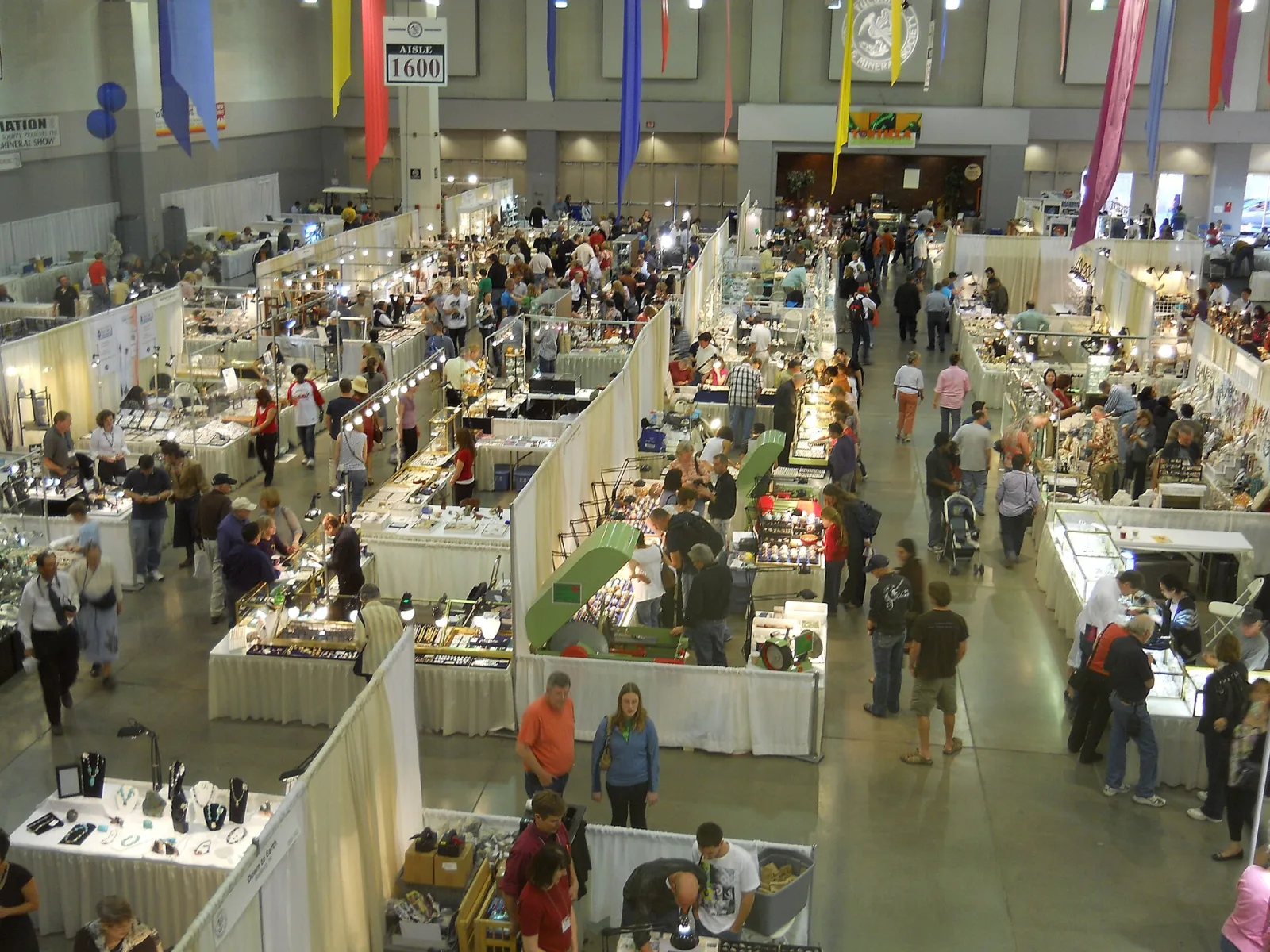
Photo: Tucson Gem and Mineral Show TM — TGMShowTM, CC BY-SA 3.0, via Wikimedia Commons
Meteorites are bought and sold openly around the world, from small fragments for a few dollars to museum-grade specimens at major auction houses. A good dealer tells you exactly what a specimen is, where it came from and how it was classified. This page explains what to look for, and how to avoid the fakes and mislabelled pieces that turn up in every market.
What makes a good meteorite dealer
- The official name. Every genuine meteorite offered as a named specimen should carry the name approved by the Meteoritical Society, such as “Gibeon” or “NWA 869”. You can check it in our meteoritical database. If a specimen is not yet classified, a good dealer will say so plainly.
- The classification and the lab. For example, “L6 ordinary chondrite”, along with who classified it.
- Weight, a scale cube and clear photos of every side, including any cut face.
- Provenance: who found it, where, and the chain of owners if known. Pieces from a well-documented fall or a famous collection are worth more.
- A written guarantee of authenticity and a fair return policy.
- Legal sourcing. Several countries restrict the collection or export of meteorites. A reputable dealer can explain how a specimen left its country of origin.
What IMCA membership means
The International Meteorite Collectors Association (IMCA) is a long-running organisation of collectors and dealers. Members agree to a code of ethics covering honest description and authenticity, and the association publishes a public list of members. Before you buy, check a dealer’s IMCA number against that list. IMCA membership is not a guarantee in itself, but it gives you a recognised standard to hold a seller to.

On Meteorite World, members can add IMCA, Meteoritical Society and other affiliation badges to their profile. Dealers can also apply for Meteorite World Verified (MWA) status. Badges are only shown once we have checked them.
What to check before you buy
- Look up the name in the database. Confirm that the class and the fall or find year match what the seller says.
- Compare photos with other known specimens of the same meteorite. Gibeon, Campo del Cielo, Sikhote-Alin and NWA material each have a characteristic look.
- Ask about weathering, cracks and treatment. Has it been cleaned, coated, stabilised or re-etched?
- Check the price against other listings. Common meteorites are inexpensive, and an unusually cheap “Martian” or “lunar” meteorite is a warning sign.
- Keep the paperwork: the label, invoice and any certificate. They become part of the specimen’s provenance.
Fakes, meteor-wrongs and red flags
- Cast or machined “irons” made from ordinary steel, sometimes acid-etched to imitate a Widmanstätten pattern. Genuine patterns run straight through the metal and cannot be polished away.
- Industrial slag and furnace waste, often full of gas bubbles (vesicles). Meteorites almost never have them.
- Terrestrial rocks such as magnetite, hematite or basalt, sold as meteorites. See meteorite identification for how to tell them apart.
- Invented names or classes, “certificates” from labs that do not exist, or reluctance to say where a piece came from.
- Pressure to pay outside the platform or by untraceable methods.
If something on Meteorite World looks wrong, use the Report button on the listing. Reports from verified members are reviewed first.
Where to buy meteorites
- Established dealers, online or at shows. The Tucson Gem and Mineral Show season each winter in Arizona is the biggest meteorite market of the year, and dealers from around the world attend.
- Auction houses such as Christie’s, Bonhams and Heritage Auctions, which hold occasional meteorite sales for rare and display-grade pieces.
- The Meteorite World Marketplace, where every listing shows the official name or says it is unclassified, the weight, photos and the seller’s badges.
Meteorite dealers in our directory
These businesses are listed in the Meteorite World Directory. A listing is not an endorsement, and businesses are only marked as verified once they have completed Meteorite World verification.
Frequently asked questions
How do I know a meteorite is real?
Buy pieces with an official name you can check in the Meteoritical Bulletin Database, from a seller who gives a written guarantee and clear provenance. For unnamed rocks, a classification by a recognised lab is the only reliable proof.
What does IMCA mean?
IMCA is the International Meteorite Collectors Association. Members agree to a code of ethics, and the association publishes a list of members you can check a dealer’s number against.
Are meteorites expensive?
Not always. Common chondrites and irons such as Campo del Cielo can cost very little per gram. Rare types, witnessed falls, lunar and Martian meteorites, and display pieces cost far more.
Is it legal to buy and sell meteorites?
In most places, yes, but some countries restrict collecting or export, and meteorites from protected land can be illegal to sell. A reputable dealer will be able to explain where a specimen came from.