

Meteorite Hunting: Where and How to Find Meteorites
Where to search, the gear, how to log a find, and the rules on public and private land.
Photo: Meteorite hunting in Mojave desert — Meteoritekid at English Wikipedia, CC BY-SA 3.0, via Wikimedia Commons
Meteorite hunting means searching the ground for rocks from space, either across land known to preserve old meteorites, or on the fresh strewn field of a fireball seen days earlier. It takes patience, the right ground, and a good understanding of what you are looking for. This guide covers where to look, the gear, how to log a find, and the rules you need to follow.
Where to look for meteorites

Meteorites land everywhere, at random. You find them where they survive for a long time and stand out from the ground around them.
- Hot deserts. In the Sahara, Arabian Peninsula, Atacama, Mojave and Nullarbor, the dry climate slows weathering. Dark stones show up well on pale sand or desert pavement.
- Dry lake beds. On flat, fine-grained playas, any rock bigger than a pebble is unusual and easy to spot.
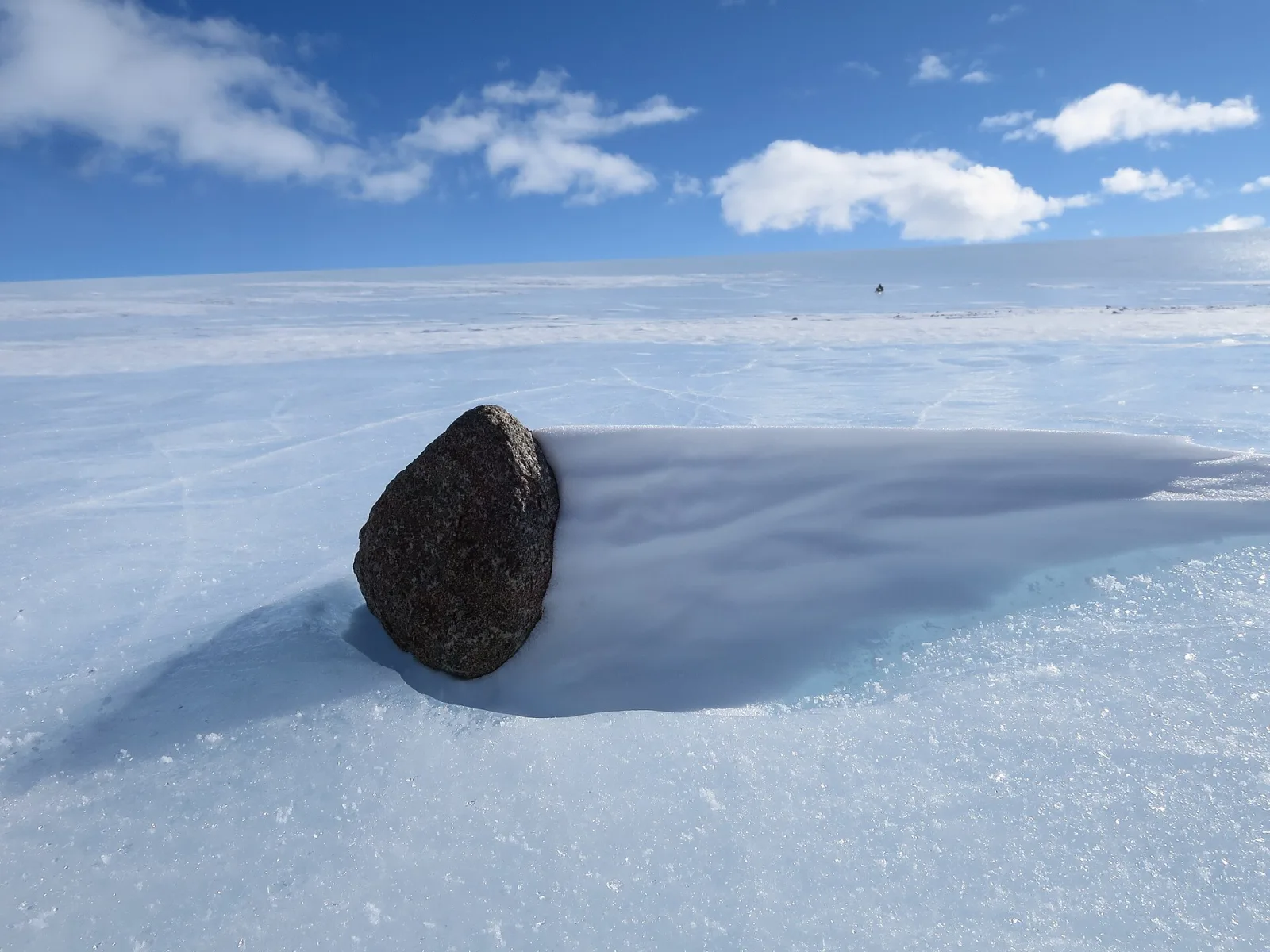
- Antarctica. The ice sheet carries meteorites to “stranding zones” of blue ice where they are concentrated. Most known meteorites were found there by scientific teams such as ANSMET.
- Known strewn fields and historic finds. Areas such as Gold Basin in Arizona, or famous fields like Campo del Cielo in Argentina, still give up new pieces. Many are on protected or private land, so check the rules.
- Farmland and cleared ground. Field-clearing piles and ploughed fields in some regions have produced finds. Ask the landowner first.
Hunting a new fall
When a bright fireball drops meteorites, the race to find them starts within hours. The steps are:
- Trajectory. Eyewitness reports (American Meteor Society, IMO), all-sky camera networks and satellite sensors pin down the fireball’s path and where it stopped glowing.
- Radar. Falling meteorites can show up on weather radar (NEXRAD in the US) as they drop through the dark-flight zone, which narrows the search area.
- Wind. During dark-flight, the pieces are pushed by upper-level winds. Weather-balloon data is used to model where they landed.
- The strewn field. The result is an elongated ellipse. The smallest pieces land first, near the start, and the largest travel farthest along the path.
Meteorite World follows new events on the falls tracker, with fireball reports, radar returns and wind data in one place. The meteorite map shows known meteorites and strewn fields, and lets you export them for your GPS.
Meteorite hunting gear

- A magnet cane or magnet stick. A strong magnet on the end of a walking stick lets you test likely stones without bending down.
- A metal detector. Iron and most stony meteorites contain metal. A detector that handles mineralised ground helps find buried or hidden pieces.
- GPS or a phone with offline maps, to log every find and search your planned area in lines.
- Find kit: clean zip bags or foil, gloves, a scale or ruler for photos, flags, a notebook and a permanent marker.
- Safety gear: plenty of water, sun protection, a first-aid kit, and a way to call for help. Many hunting areas are remote and hot.
Searching technique
- Walk in straight lines (transects), a few metres apart. Groups walk side by side.
- Keep the sun behind you or to the side. Fresh fusion crust looks black and shows up best in low, angled light.
- Look for what doesn’t belong: a dark, rounded stone with a smooth skin among pale or angular rocks.
- Learn the local rocks first, so you can ignore basalt, slag, magnetite and other meteor-wrongs.
- Be patient. Experienced hunters often walk for days between finds.
Documenting a find
A meteorite’s scientific value, and much of its market value, depends on knowing exactly where it was found. Before you pick it up:
- Photograph it in place, close up with a scale and wide enough to show the surroundings.
- Record the GPS coordinates, the date and time, and who found it.
- Lift it without bare hands, using a clean bag or foil, and keep it dry. Fresh falls are very valuable to science, and skin oils and moisture contaminate and rust them.
- Note anything unusual, such as an impact pit, broken pieces or crust condition.
- Report it. For a new fall, tell the researchers tracking the event. Any new meteorite needs a lab classification before it can get an official name (see how meteorites are named).
Meteorite World members can log finds privately in My finds. Exact locations stay hidden from the public map for 30 days to protect a fresh strewn field.
Meteorite hunting etiquette
Most of these come straight from metal detecting, and they’re what keep landowners saying yes to the next hunter.
- Never hunt private land without permission. Ask first, and get it in writing if you can.
- Never hunt restricted or protected areas. That includes national parks and monuments, military land, and protected sites such as Meteor Crater, Henbury and Odessa. Turn on Land status on any Meteorite World map to see who manages the ground.
- Always fill your holes. If your detector sends you digging, put the ground back the way you found it.
- Leave gates as you found them, and don’t drive across crops or fields.
- Pack out your trash, plus any junk metal you dig up.
- Know the land rules. Rules differ between federal, state, tribal and private land, and selling meteorites from public land can bring in extra rules. Check before you hunt (see laws and permission below).
- Respect other hunters. Don’t crowd someone working an area, and don’t jump someone’s spot.
- Document every find. Take an in-place photo and a GPS reading before you pick it up.
- Thank the landowner, and offer to share what you find. It helps the next hunter get a yes.
- Get your finds classified. Send a sample to a classification lab so new meteorites get an official name and help science.
Laws and permission

The rules depend on the country and on who owns or manages the land. Always check before you hunt. This is general information, not legal advice.
- Private land. In the United States, a meteorite generally belongs to the owner of the land it falls on. This principle goes back to the 1892 Iowa case Goddard v. Winchell. Get the landowner’s permission, preferably in writing, and agree in advance who keeps what.
- US federal land. Different agencies have different rules. The Bureau of Land Management has a specific policy for meteorites on public land, covering casual collecting and when a permit is needed, so check its current guidance. Collecting is prohibited in national parks and national monuments without authorisation.
- State, tribal and protected land each have their own rules, which often include a ban on collecting.
- Other countries. Some countries treat meteorites as national heritage. They restrict collecting or export, or require finds to be reported or handed to a museum. Examples include several Australian states, Oman and Argentina. Ask the national authorities before hunting abroad.
Frequently asked questions
Where is the best place to find meteorites?
Hot deserts, dry lake beds and Antarctic blue ice, where meteorites survive for a long time and stand out against the ground. Fresh strewn fields from recently observed fireballs are also good, with permission.
Do I need a metal detector to find meteorites?
No, many meteorites are found by eye. But a detector helps with buried or hidden pieces, and a magnet cane is a cheap way to test likely stones.
Who owns a meteorite found on private land?
In the United States the meteorite generally belongs to the landowner, so always get permission first and agree in advance what happens to any finds. Laws differ in other countries.
Can I hunt meteorites in national parks?
No. Collecting meteorites, rocks or any natural objects in US national parks and monuments is prohibited without authorisation. Other protected areas have similar rules.
What should I do if I find a meteorite from a new fall?
Photograph it in place, record the GPS coordinates and time, pick it up with a clean bag rather than bare hands, keep it dry, and contact the researchers or a meteorite lab so it can be studied and classified.