

Meteoritical Database: Search Official Meteorite Names
Search tens of thousands of officially recognized meteorites, and learn how naming works.
Photo: Hoba meteorite, Namibia (2014) — Olga Ernst, CC BY-SA 4.0, via Wikimedia Commons
Every recognised meteorite has an official name, approved by the Meteoritical Society and published in the Meteoritical Bulletin. Its database is the world’s reference list of meteorites. Below you can search Meteorite World’s copy of 61,706 official entries, then open any meteorite’s full record on the official Bulletin site.
Search meteorites
| Name | Class | Mass | Fall / find | Year | |
|---|---|---|---|---|---|
| Allan Hills 84172 | H5 | 3.0 g | Find | 1984 | Official record ↗ · Map |
| Allan Hills 84173 | L6 | 1.7 g | Find | 1984 | Official record ↗ · Map |
| Allan Hills 84174 | L6 | 32 g | Find | 1984 | Official record ↗ · Map |
| Allan Hills 84175 | H5 | 35 g | Find | 1984 | Official record ↗ · Map |
| Allan Hills 84176 | H6 | 4.6 g | Find | 1984 | Official record ↗ · Map |
| Allan Hills 84177 | L5 | 7.3 g | Find | 1984 | Official record ↗ · Map |
| Allan Hills 84178 | H5 | 0.4 g | Find | 1984 | Official record ↗ · Map |
| Allan Hills 84179 | H5 | 47 g | Find | 1984 | Official record ↗ · Map |
| Allan Hills 84180 | H6 | 47 g | Find | 1984 | Official record ↗ · Map |
| Allan Hills 84181 | L6 | 33 g | Find | 1984 | Official record ↗ · Map |
| Allan Hills 84182 | L6 | 14 g | Find | 1984 | Official record ↗ · Map |
| Allan Hills 84183 | H5 | 28 g | Find | 1984 | Official record ↗ · Map |
| Allan Hills 84184 | H5 | 42 g | Find | 1984 | Official record ↗ · Map |
| Allan Hills 84185 | H5 | 4.8 g | Find | 1984 | Official record ↗ · Map |
| Allan Hills 84186 | H6 | 20 g | Find | 1984 | Official record ↗ · Map |
| Allan Hills 84187 | H6 | 26 g | Find | 1984 | Official record ↗ · Map |
| Allan Hills 84188 | EH3 | 3.1 g | Find | 1984 | Official record ↗ · Map |
| Allan Hills 84189 | H6 | 8.7 g | Find | 1984 | Official record ↗ · Map |
| Allan Hills 84190 | Acapulcoite | 7.9 g | Find | 1984 | Official record ↗ · Map |
| Allan Hills 84191 | CM2 | 14 g | Find | 1984 | Official record ↗ · Map |
| Allan Hills 84192 | H5 | 4.2 g | Find | 1984 | Official record ↗ · Map |
| Allan Hills 84193 | L6 | 9.4 g | Find | 1984 | Official record ↗ · Map |
| Allan Hills 84194 | H5 | 3.9 g | Find | 1984 | Official record ↗ · Map |
| Allan Hills 84195 | L4 | 2.1 g | Find | 1984 | Official record ↗ · Map |
| Allan Hills 84196 | H5 | 10 g | Find | 1984 | Official record ↗ · Map |
| Allan Hills 84197 | L6 | 8.2 g | Find | 1984 | Official record ↗ · Map |
| Allan Hills 84198 | LL6 | 5.4 g | Find | 1984 | Official record ↗ · Map |
| Allan Hills 84199 | H5 | 27 g | Find | 1984 | Official record ↗ · Map |
| Allan Hills 84200 | EH3 | 8.5 g | Find | 1984 | Official record ↗ · Map |
| Allan Hills 84201 | H5 | 6.3 g | Find | 1984 | Official record ↗ · Map |
| Allan Hills 84202 | H5 | 88 g | Find | 1984 | Official record ↗ · Map |
| Allan Hills 84203 | L6 | 8.8 g | Find | 1984 | Official record ↗ · Map |
| Allan Hills 84204 | H6 | 24 g | Find | 1984 | Official record ↗ · Map |
| Allan Hills 84205 | L3.9 | 25 g | Find | 1984 | Official record ↗ · Map |
| Allan Hills 84206 | EH3 | 15 g | Find | 1984 | Official record ↗ · Map |
| Allan Hills 84207 | L6 | 4.5 g | Find | 1984 | Official record ↗ · Map |
| Allan Hills 84208 | H6 | 21 g | Find | 1984 | Official record ↗ · Map |
| Allan Hills 84209 | L5 | 5.5 g | Find | 1984 | Official record ↗ · Map |
| Allan Hills 84210 | L6 | 8.8 g | Find | 1984 | Official record ↗ · Map |
| Allan Hills 84211 | H6 | 49 g | Find | 1984 | Official record ↗ · Map |
| Allan Hills 84212 | L6 | 7.1 g | Find | 1984 | Official record ↗ · Map |
| Allan Hills 84213 | H5 | 6.7 g | Find | 1984 | Official record ↗ · Map |
| Allan Hills 84214 | H6 | 4.9 g | Find | 1984 | Official record ↗ · Map |
| Allan Hills 84215 | H6 | 9.2 g | Find | 1984 | Official record ↗ · Map |
| Allan Hills 84216 | H5 | 5.5 g | Find | 1984 | Official record ↗ · Map |
| Allan Hills 84217 | H5 | 2.7 g | Find | 1984 | Official record ↗ · Map |
| Allan Hills 84218 | L6 | 33 g | Find | 1984 | Official record ↗ · Map |
| Allan Hills 84219 | L6 | 9.8 g | Find | 1984 | Official record ↗ · Map |
| Allan Hills 84220 | EH3 | 8.4 g | Find | 1984 | Official record ↗ · Map |
| Allan Hills 84221 | H5 | 16 g | Find | 1984 | Official record ↗ · Map |
Data from the Meteoritical Bulletin Database (Meteoritical Society, hosted by the Lunar and Planetary Institute). Our copy is updated periodically and may not include the newest approvals. The official database is the authority.
How meteorites are named

A meteorite is named after the place where it fell or was found, usually a nearby town, farm or natural feature: Allende, Murchison, Hoba. Where many meteorites come from the same small area, the name is a place name plus a number:
- Hot deserts with recorded find coordinates are divided into named areas, for example Dhofar 1653 in Oman or Acfer 048 in Algeria.
- NWA (Northwest Africa) is used for meteorites from the Sahara whose exact find site is unknown, for example NWA 869.
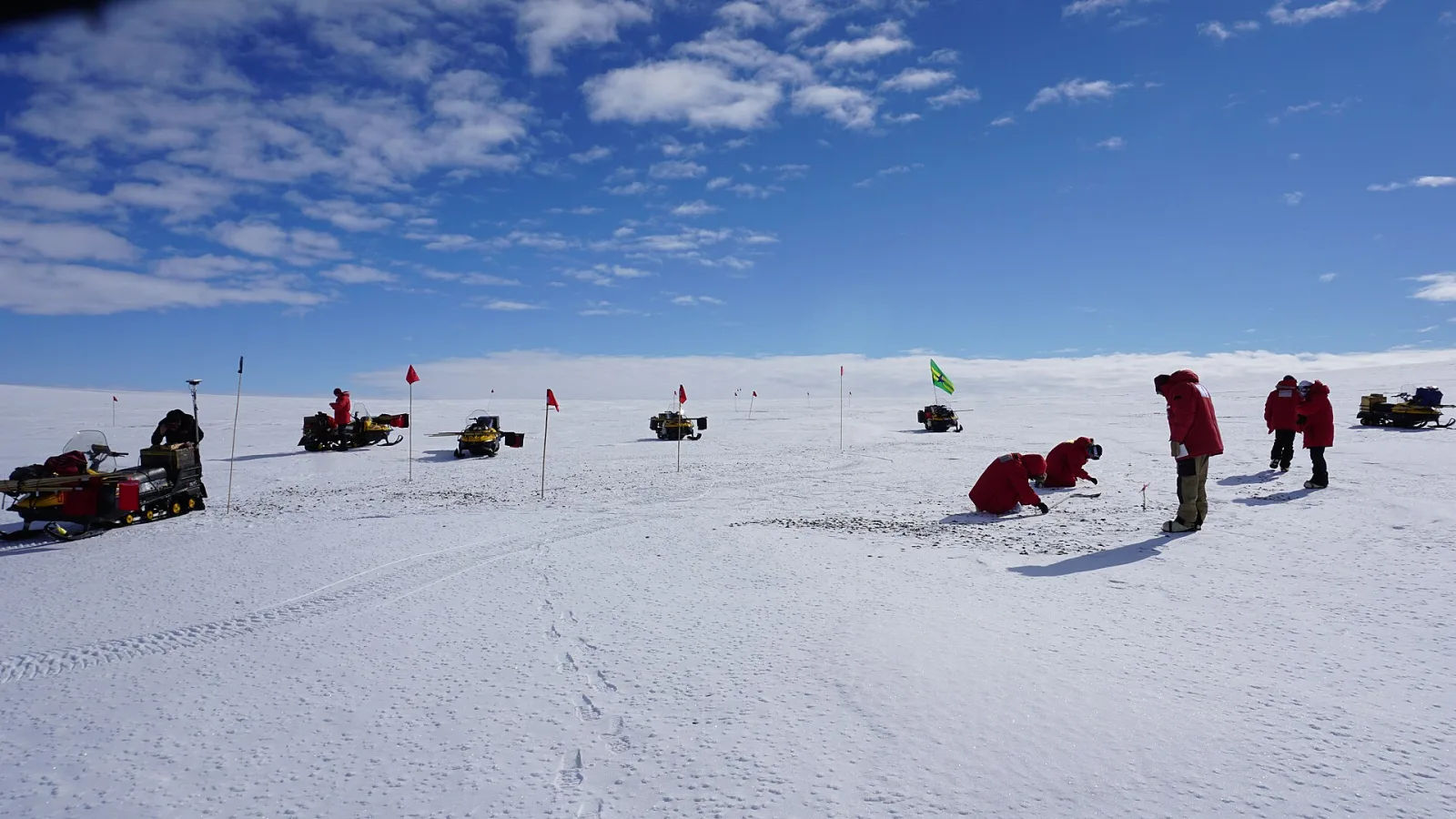
- Antarctic meteorites use a short code for the ice field and the field season year, plus a number. ALH 84001 is from the Allan Hills, collected in the 1984–85 season.
The record for each meteorite lists its class, its total known weight (TKW), whether it was a fall or a find, the year, the location and where the type specimen is held.
The most common classes in the database
Ordinary chondrites (H, L and LL, followed by a petrologic type from 3 to 6) make up most of the list. Only about 2.0% of entries in our copy are witnessed falls. The rest are finds, most of them from Antarctica and the hot deserts. For what the class letters mean, see the meteorite glossary.
Getting a new meteorite named
- Keep the find together, with its GPS location, photos and the date it was found (see meteorite hunting).
- Contact a classification lab, usually a university or museum meteorite group. The lab studies a sample and confirms the type.
- Deposit a type specimen. A required portion of the meteorite (often 20 g or 20% of the mass, whichever is less) goes to a recognised repository.
- The lab submits the data and proposed name to the Meteoritical Society’s Nomenclature Committee. Once approved, the meteorite appears in the Meteoritical Bulletin.
Frequently asked questions
What is the Meteoritical Bulletin Database?
It is the official list of every meteorite recognised by the Meteoritical Society, with each one’s name, class, mass, fall or find status, year and location. It is hosted by the Lunar and Planetary Institute.
How many meteorites are officially recognised?
More than 70,000 meteorites have approved names, and over a thousand new ones are added in a typical year, most of them from deserts and Antarctica.
What does NWA mean in a meteorite name?
NWA stands for Northwest Africa. It is used for meteorites found in the Sahara whose exact find location is not known, followed by a number, such as NWA 869.
Can I name a meteorite I found?
You can propose a name, but it must follow the Meteoritical Society’s rules. It is normally the nearest place name, and it is submitted through the lab that classifies the meteorite.